
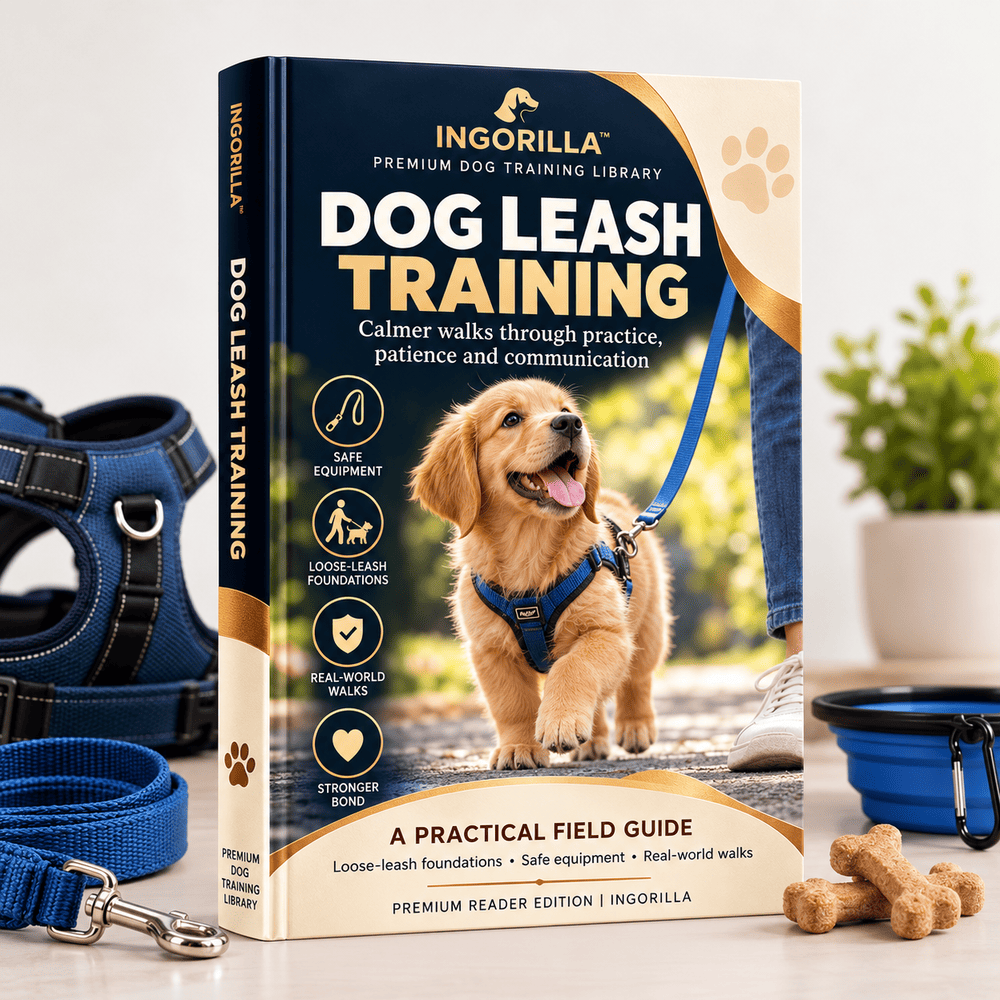
A Practical Guide to Calm, Loose-Leash Walking
السعر الأصلي هو: 17,00 $.12,00 $السعر الحالي هو: 12,00 $.
Enjoy calmer, safer walks with your dog. Learn how to introduce leash equipment, encourage loose-leash walking, reduce pulling, handle leash biting, and build better walking habits through patience and reward-based practice.
Format: Digital PDF eBook · 10 pages
Dog Leash Training
Calmer Walks Through Practice, Patience and Communication
Does your dog pull on the leash, bite it during walks, or refuse to move? Dog Leash Training is a practical field guide designed to help dog owners develop safer walking habits through gradual practice, clear communication, and rewards.
Rather than relying on leash jerks or intimidation, this guide focuses on helping your dog learn what to do while keeping comfort and safety at the center of every walk.
What You’ll Learn
- Safe Walking Equipment: Understand leash length, collar and harness fit, equipment checks, and everyday walking essentials.
- Introducing the Leash: Help your dog become comfortable with walking equipment through short indoor sessions.
- Loose-Leash Walking: Encourage check-ins, reward a relaxed leash, and respond calmly when tension increases.
- Sniffing Walks and Heel Training: Understand the difference between relaxed exploration and focused walking beside you.
- Handling Leash Biting: Explore practical ways to reduce frustration and redirect your dog toward safer alternatives.
- When Your Dog Refuses to Walk: Consider possible discomfort, fear, fatigue, heat, and environmental distractions.
- Pulling and Lunging: Learn basic safety strategies, create distance from triggers, and recognize when professional help may be appropriate.
- A Flexible 7-Day Practice Plan: Follow a structured introduction to equipment, indoor practice, loose-leash skills, and gradual outdoor training.
Why Choose This Guide?
- Practical lessons for everyday dog owners.
- Reward-based training principles.
- Guidance for common walking challenges.
- A flexible plan that can be repeated at your dog’s pace.
- A walk checklist and progress log to help you track improvements.
Product Details
- Brand: INGORILLA
- Format: Digital PDF eBook
- Length: 10 pages
- Category: Dog Training & Behavior
- Delivery: Digital download
Important Note
Every dog learns at a different pace. Avoid dragging, startling, or forcing a frightened dog to continue walking. Sudden refusal to walk, limping, breathing difficulty, or persistent distress may require veterinary advice. Repeated lunging or bite-risk concerns may require a qualified, reward-based behavior professional.
Build a calmer walking routine—one small, rewarded step at a time.







Reviews
There are no reviews yet.